Furniture Designer
Working in art and design careers
Furniture design is a job driven by passion, combining creativity, innovation and technical craftsmanship. Furniture designers create the furniture and objects that are part of our daily lives: tables, chairs, armchairs, sofas, lighting, storage, contract furniture and pieces intended for public spaces.
Overview
Furniture design is a job driven by passion, combining creativity, innovation and technical craftsmanship. Furniture designers create the furniture and objects that are part of our daily lives: tables, chairs, armchairs, sofas, lighting, storage, contract furniture and pieces intended for public spaces.
At the crossroads of art, design and industry, they create products that are attractive, functional and suited to how people use them. They also have to take into account materials, manufacturing processes, technical and economic constraints and environmental considerations.
A furniture designer's responsibilities, step by step
Furniture designers usually follow a project from research and design through to the finished product. Depending on their role and the company they work for, they may be involved in the whole process or focus on particular stages.
Their job is to strike the right balance between aesthetics, functionality, use, technique, cost and brand identity.
1. Analysing the need and the brief
Before starting to draw, furniture designers need to understand the context of the project. In particular, they analyse:
- user needs;
- the uses the furniture has to meet;
- the brand's positioning;
- the product's target audience;
- dimensional and ergonomic constraints;
- the materials under consideration;
- manufacturing processes;
- the budget;
- environmental constraints;
- design and production lead times.
This phase sets the broad direction of the project.
2. Researching and developing a concept
Furniture designers then begin a phase of creative research. They produce sketches, explore different forms, look for references, study trends and experiment with different combinations of materials.
They may also produce moodboards, research boards or models in order to pin down the visual world of the future product. This stage brings out a concept consistent with the needs identified and with the brand's identity.
3. Designing the furniture
Once the concept has been defined, the furniture designer develops the product in more detail. In particular, they work on:
- proportions;
- forms;
- ergonomics;
- joints and assembly;
- materials;
- colours and finishes;
- functional details;
- dimensions;
- ease of disassembly and repair;
- building in manufacturing constraints.
Designers constantly have to find a balance between the creative idea and how feasible it is.
4. Modelling and presenting the project
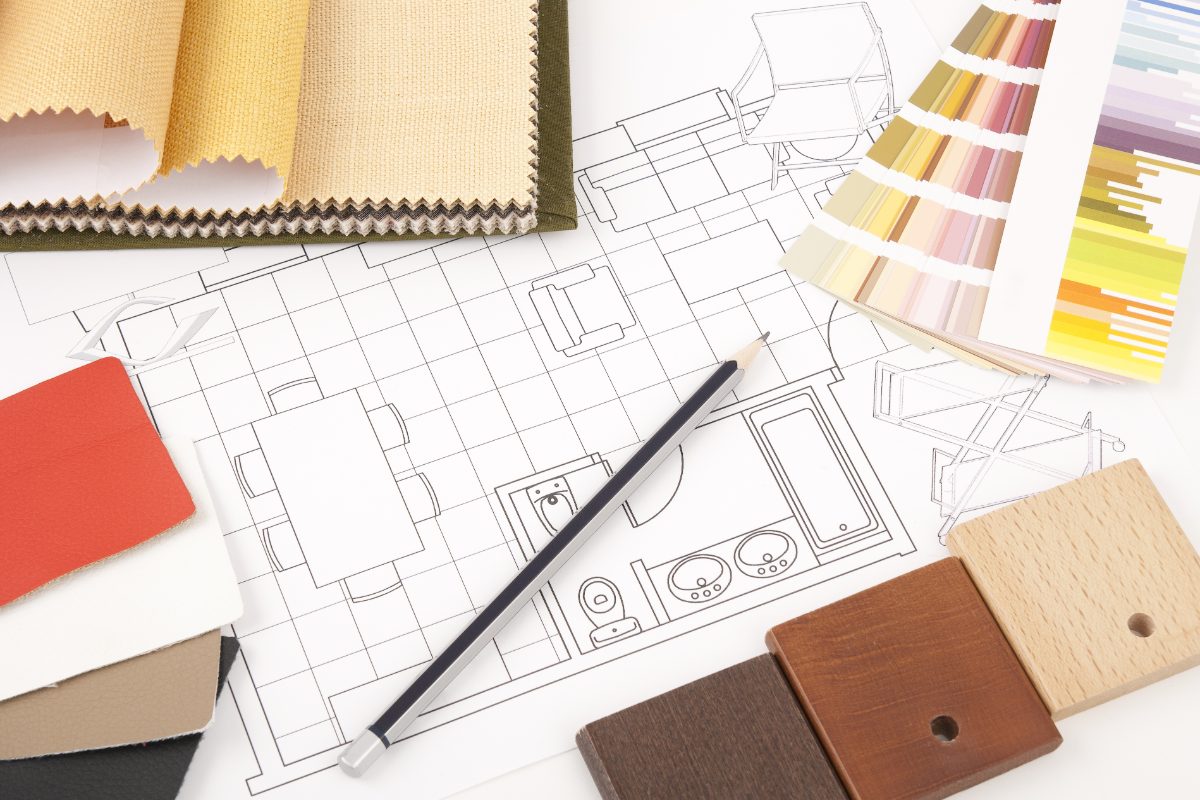
Digital tools play an important part in a furniture designer's work. They use drawing, computer-aided design and 3D modelling software to develop their products and communicate their intentions. They may produce:
- technical drawings;
- 3D models;
- photorealistic renderings;
- exploded views;
- files for manufacturing;
- presentations and pitch documents.
These representations are used in particular to present the project to the client, the manufacturer or the production team.
5. Producing prototypes
Prototyping is an essential stage of the design process. Furniture designers can build, or have others build, models and prototypes in order to check dimensions, proportions, ergonomics, materials and assembly.
Testing makes it possible to identify problems and gradually improve the product before it goes into production. Designers may therefore work closely with craftspeople, manufacturers, engineers or design offices.
6. Supporting manufacturing
A furniture designer's work does not necessarily stop at drawing the product. Depending on their role, they may follow the various manufacturing stages and liaise with manufacturers or craftspeople to make sure the finished product stays true to the original concept.
In particular, they have to take account of production constraints, costs, quantities, lead times and the quality of the finishes.
7. Designing collections
Furniture designers can also work at the scale of a whole collection. In that case they are not designing a single piece of furniture but a family of products sharing the same identity: a chair together with a stool, a table and an armchair, for example.
They then have to create consistency between the different products while allowing each of them to meet a different use.
What career opportunities are there for furniture designers?
Furniture designers can work in many sectors. They may work for furniture manufacturers, design publishers, design agencies, brands or companies specialising in fitting out spaces.
They may work on residential, office, hotel, retail or public-space furniture.
Furniture designer, product designer or interior architect?
These three professions may well work together, but they do not address exactly the same questions.
The furniture designer specialises in designing furniture and furniture collections. They work on its form, use, ergonomics, materials and manufacturing processes.
The product designer has a broader remit. They may design a very wide range of objects and products: household appliances, accessories, connected devices, equipment or furniture. Furniture is therefore one of the possible specialisms within product design.
The interior architect works mainly on the layout of a space. They design the volumes, circulation, materials, atmosphere and uses of a place. Furniture may form part of their project, but they work at a different scale.
In short: furniture designers create the objects that fill our spaces; interior architects design the spaces we live in.
Furniture designers can nevertheless work closely with interior architects to design furniture suited to an architectural project or to develop bespoke pieces.
What qualities do you need to become a furniture designer?
Furniture design calls for a combination of creativity, aesthetic sensitivity and technical skill. A good furniture designer needs to show:
- Creativity, to imagine new forms and new uses;
- Curiosity, to discover new materials, processes and technologies;
- Powers of observation, to understand how users behave and what they need;
- Aesthetic sensitivity, to work with proportion, form, colour and texture;
- Design culture, to know the history of furniture, the great designers and contemporary trends;
- Rigour, to develop a product down to the last detail;
- Technical command, to understand materials and manufacturing processes;
- Command of digital drawing, CAD and 3D modelling tools;
- A willingness to experiment, to test materials, forms and technical solutions;
- Teamwork, to collaborate with manufacturers, engineers, craftspeople, architects and marketing teams;
- The ability to make a case, to present and defend their design choices.
A sound knowledge of materials
Knowledge of materials is a particularly important skill for a furniture designer. Wood, metal, glass, plastic, textiles, stone, composites or recycled materials: each has its own properties, constraints and possibilities.
Designers need to understand how a material behaves, how it can be worked and how its use affects the cost, manufacture, durability and appearance of the product.
What is a furniture designer's salary?
A furniture designer's salary varies according to their level of experience, the type of company they work for, their specialism and the market segment of the products they design.
As a guide, a junior furniture designer can start on around €28,000 to €35,000 gross a year, or roughly €2,300 to €2,900 gross a month.
After a few years' experience, an experienced furniture designer can reach around €35,000 to €50,000 gross a year, or €2,900 to €4,200 gross a month.
Senior designers, particularly when they take charge of collections, complex projects or art direction responsibilities, can reach €50,000 to €65,000 gross a year, and sometimes more in certain companies, design houses or specialist agencies.
Pay can vary considerably by sector: residential furniture, contract furniture, hospitality, luxury, design publishing, architecture or fit-out. Location, command of 3D design and CAD tools, the ability to follow a product through to manufacture and the quality of your portfolio can also affect pay levels.
These figures are indicative only. The salary data available for furniture designers is often grouped together with that for product designers or industrial designers.
How do you get started?
To become a furniture designer, it is essential to develop design culture, a creative approach and technical skills alike.
Work placements, work-study programmes and projects carried out with companies give you an insight into the realities of design and manufacturing, and let you start building your professional network.
Your portfolio also plays an essential part in recruitment. It should make your approach clear: how did you identify a need? How did you develop your idea? What sketches did you produce? How did you choose the materials? How did you develop your prototype? What constraints did you come up against and how did you resolve them?
A good portfolio therefore does not just show beautiful 3D renderings. It tells the story of the design process and shows your ability to turn an idea into a product.
What qualifications do you need to become a furniture designer?
There is no single course that leads to becoming a furniture designer. Courses in product design, industrial design, object design or furniture design are particularly well suited.
A design course allows you to develop, in particular:
- artistic and design culture;
- analysis of how things are used;
- creative research;
- drawing and sketching;
- product design;
- ergonomics;
- knowledge of materials;
- manufacturing processes;
- 3D modelling;
- computer-aided design;
- prototyping;
- project management.
A furniture design course can also be enriched by experience in craft, industry, design publishing or interior architecture.
See the possible route at ESDACWhy train in furniture design?
Designing a piece of furniture calls for many skills at once: imagining a form, understanding a use, choosing a material, thinking through an assembly, meeting manufacturing constraints and being able to present your project.
A specialist course teaches you to move step by step from the idea to the prototype, and then from the prototype to the product.
It also allows you to develop a personal culture and a creative approach that will be essential in building your identity as a designer.
What does the future hold for furniture designers?
Furniture designers play a central part in transforming our everyday surroundings.
Consumers and businesses are now looking for products that are more durable, repairable, adaptable and responsible. These changes are pushing designers to rethink materials, methods of manufacture and even the business models behind furniture.
The growth of the circular economy, reuse, bio-based materials, local manufacturing and new technologies is opening up fresh prospects for the profession.
Furniture designers therefore no longer simply draw an attractive object: they have to think about its use, its manufacture, its lifespan and its impact.
Would you like to become a furniture designer?
Are you passionate about design, objects, materials and craftsmanship? Do you enjoy drawing, experimenting and understanding how an idea can become a real product? Furniture design could be the career for you!
Discover ESDAC's programmes.
ApplyExplore other careers
Explore the other design careers open to you with ESDAC programmes.




Need help choosing your programme?
Our admissions advisers will help you choose the programme that fits your career plans.